a personal journal on my universe surfing through the multiverse
Author: J. Sands Loch
Student and teacher of reality in all its forms.
I self-published my personal experience of discovering and trying to understand and use a model of reality based on the Many Worlds Interpretation of Quantum Mechanics:
Surfing the Multiverse: Finding Happiness One Universe at a Time
Available on Kindle and from Amazon, and found in blog post form at:
SurfingTheUniverse.com
I talked to my Mom on Mother’s Day. I feel blessed to have such a wonderful Mother who taught me to view the world through a lens of innocence and acceptance. I found some poetry that she wrote. Here are a few of her short poems that spoke to me now.
THIS MORNING SHE WOKE
This morning she woke up married
Tonight she will go to bed a widow
A whole life changed by a single day
A whole family changed by a single hour
A heart that stopped
A life gone
A father, a husband
made now only of memories
These two short one seems quite relevant:
Dear God,
If there’s anyone down here who can stop this madness,
please talk to that person quick.
Why is it we learn too late
the knowledge we need to know
and these two speak about my feelings as we come out of shelter-in-place:
FREEDOM
Freedom–we live it
But we really haven’t tasted it
Not like the people of East Berlin
They know the true taste of freedom
They are drinking it now
November 9, l989
I HAVE LEARNED
I have learned how to live
And I’ve learned how to give
And I’ve learned how to smile
with the sun
I’ve learned how to walk
Without you by my side
And I have even learned how to run
But now, what I want to do
Is put on my hiking shoes
And do you see those mountains way out there
I want to aim for the sun
And climb them one by one
And feel the wind clouds touch my hair
and finally, some thoughts for this year:
LET THIS
Let this be the year
I learn more than I ever did
Let this be the year
I keep silent and listen
Let this be the year
I let my pencil talk
The graduates, 97% of whom were in South Korea, had completed an 8-month theology program that covers the Bible, with emphasis on the prophecies from the book of Revelation. The graduation ceremony was held on November 10, 2019.
From the article:
Of course it is incredible enough to see 100,000 students graduating from a single denomination; however, what is more shocking is that Shincheonji — which is teaching the fulfillment of Revelation and has been growing at an incredibly rapid pace since 1984 is labeled as a “cult” by the Christian world of the Republic of Korea especially through the CCK (Christian Council of Korea).
The growth of Shincheonji is expected to grow exponentially after the graduation. With the evangelism rate of the graduates being over 100%, currently there are 200,000 plus students that are enrolled in the theology program. If Shincheonji continues to grow at this pace, then within 3 years it will reach a million congregation members, and the status quo of the religious world will change.
On the day prior, there was another article on prnewswire.com:
Shincheonji Church of Jesus, the Temple of the Tabernacle of the Testimony (SCJ) is calling for the resignation of the President of the Christian Council of Korea (CCK) Pastor Jun Kwang-hoon as well for the CCK to be disbanded following controversial comments made by Pastor Jun.
A representative of Shincheonji Church of Jesus said, “President Jun Kwang-hoon claims that he has been anointed, and even asserting that the entire country of South Korea centers around him, and that he will kill God if things do not go his way.” He also explained, “Such assertions expose his heretic beliefs that use religion for power and oppose God. The CCK – a political organization masked under religion – must be shut down immediately.”
On Feb 26, 2020, an article in businessinsider.com had this interesting quote which mentions rumors about a virus began circulating in November:
“Rumours about a virus began to circulate in November but no one took them seriously,” an anonymous 28-year-old kindergarten teacher who belongs to Shincheonji told the Post. “I was in Wuhan in December when our church suspended all gatherings as soon as we learned about [the coronavirus].”
The kindergarten teacher wouldn’t comment on whether any Shincheonji members from Wuhan had traveled to South Korea recently but also insisted that they had nothing to do with the mass COVID-19 cases that have erupted there.
“I don’t think the virus came from us because none of our brothers and sisters in Wuhan have been infected,” she told the Post. “I don’t know about members in other places but at least we are clean. None of us have reported sick. There are so many Chinese traveling to South Korea, it’s quite unfair to pin [the disease] on us.”
Adding the common cold treatment of Zinc and Vitamin C with Schweppes tonic water is a so called “fake” treatment for COVID-19. Reference: Tweet by @RockNRoll761 on Apr 9
Hydroxychloroquine has been a controversial treatment for COVID-19, at least since President Trump mentioned it as a potential treatment, along with Zinc, at a daily briefing. Various attempts to show the efficacy of Hydroxychloroquine have shown mixed results. Those who believe Hydroxychloroquine is harmful point to studies showing apparent side effects with no benefits. Those who believe Hydroxychloroquine could be helpful, claim that in order to be effective, it must be administered early and with Zinc. This paper attempts to address the question of whether the addition of Zinc makes a difference. The results shown in the paper indicate that Zinc is helpful. From the Results section:
The addition of zinc sulfate did not impact the length of hospitalization, duration of ventilation, or ICU duration. In univariate analyses, zinc sulfate
increased the frequency of patients being discharged home, and decreased the need for ventilation, admission to the ICU, and mortality or transfer to hospice for patients who were never admitted to the ICU. After adjusting for the time at which zinc sulfate was added to our protocol, an increased frequency of being discharged home (OR 1.53, 95% CI 1.12-2.09) reduction in mortality or transfer to hospice remained significant (OR 0.449, 95% CI 0.271-0.744).
The conclusion of the paper:
This study provides the first in vivo evidence that zinc sulfate in combination with hydroxychloroquine may play a role in therapeutic management for COVID-19.
Here are some quotes that I found of interest from the paper, along with some of my thoughts:
The U.S. Food and Drug Administration authorized the emergency use of hydroxychloroquine for the treatment of COVID-19 with or without azithromycin.
I’m curious where Zinc fit into the authorization – and if dosage levels were mentioned.
Chloroquine analogues are weak bases that concentrate within acidic endosomes and lysosomes. Once intracellular, chloroquine analogues become protonated and increase pH resulting in prevention of endosomal trafficking, dysfunctional cellular enzymes, and impaired protein synthesis [7].
This inhibits viral replication through interference with endosome-mediated viral entry or late transport of the enveloped virus. Further, this results in interference with the terminal glycosylation of ACE2 receptor expression which prevents SARS-CoV-2 receptor binding and spread of infection [8].
[7] is a 2003 paper written (in The Lancet Infectious Diseases) during the initial SARS epidemic by Savarino et. al. entitled Effects of chloroquine on viral infections: an old drug against today’s diseases.
[8] is a 2005 paper written (in Virology Journal) just after the initial SARS epidemic by Vincent et al. entitled Chloroquine is a potent inhibitor of SARS coronavirus infection and spread.
For COVID-19, hydroxychloroquine (a hydroxy-derivative of chloroquine) has been proposed to be used instead of chloroquine. Recently, it has been shown to have 3x higher cytotoxic potential in vitro against SARS-CoV-2 compared to chloroquine [9].
[9] is a 2020 paper (written in Clinical Infectious Diseases) by Yao et. al. entitled The Treatment of Severe Acute Respiratory Syndrome Coronavirus 2 (SARS-CoV-2).
A 2010 paper (written in PLOS Pathogens) by the Velthuis et. al. entitled Zn2+Inhibits Coronavirus and Arterivirus RNA Polymerase Activity in Vitro and Zinc Ionophores Block the Replication of These Viruses in Cell Culture. The title pretty much says it all.
The idea behind combining Hydroxychloroquine with Zinc is based on the difficulty of achieving a high enough intracellular concentration of Zinc without a zinc ionophore, such as chloroquine. (Reference: Xue et. al. 2014 paper in PLoS one entitled Chloroquine is a zinc ionophore)
Regarding the main finding of this paper:
The main finding of this study is that after adjusting for the timing of zinc therapy, we found that the addition of zinc sulfate to hydroxychloroquine and azithromycin was found to associate with a decrease in mortality or transition to hospice among patients who did not require ICU level of care, but this association was not significant in patients who were treated in the ICU.
Our findings suggest a potential therapeutic synergistic mechanism of zinc sulfate with hydroxychloroquine, if used early on in presentation with COVID-19.
The authors identified a number of limitations of their study and ended with:
In light of these limitations, this study should not be used to guide clinical practice. Rather, our observations support the initiation of future randomized clinical trials investigating zinc sulfate against COVID-19.
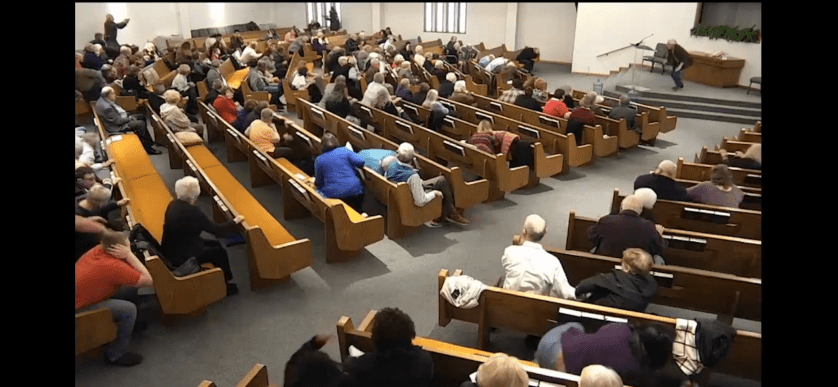
20200509u Santa Cruz, CA: As I searched for what happened today, I came across a church shooting in Texas. For some reason, I took a picture on my phone of the video:
Texas Church Shooting – 2019-12-29u
The thought I had when remembering this church shooting was how the COVID-19 pandemic has affected religious services across the world.
Most of the paper authors are from King Abdulaziz University in Jeddah Saudi Arabia. Key quotes from the paper summary:
OBJECTIVE: This study aimed to assess the efficacy of the INTERCEPT™ Blood System [amotosalen/ultraviolet A (UVA) light] to reduce the risk of Middle East respiratory syndrome‐Coronavirus (MERS‐CoV) transmission by human platelet concentrates.
RESULTS: Complete inactivation of MERS‐CoV in spiked platelet units was achieved by treatment with Amotosalen/UVA light with a mean log reduction of 4·48 ± 0·3. Passaging of the inactivated samples in Vero E6 showed no viral replication even after nine days of incubation and three passages. Viral genomic RNA titration in inactivated samples showed titres comparable to those in pre‐treatment samples.
CONCLUSION: Amotosalen and UVA light treatment of MERS‐CoV‐spiked platelet concentrates efficiently and completely inactivated MERS‐CoV infectivity (>4 logs), suggesting that such treatment could minimise the risk of transfusion‐related MERS‐CoV transmission.
This paper is interesting because it looks at using UVA light as an antiviral, as opposed to the shorter wavelength UVC light.
Before going into the paper, I found it helpful to review UV light and where it fits into the electromagnetic spectrum. From the FDA: Ultraviolet (UV) Radiation.
Ultraviolet (UV) light has a frequency just a bit higher than visible light. If you remember the colors of the rainbow in order of low to high frequency using the ROYGBIV acronym, then you know the visible colors Red, Orange, Yellow, Green, Blue, Indigo, Violet. The next colors are Ultraviolet A, Ultraviolet B, and Ultraviolet C.
The longer the UV light wavelength, the more penetration light has into the Earth’s atmosphere, our skin, and our eyes. Light with wavelengths in the range 300-400 nm are blocked by the lens of our eyes. For this reason, we use 400 nm as the cut off point for defining UV light. Light with wavelengths shorter than 300 nm are blocked by the cornea or our eyes.
Ultraviolet A (UVA) is light with an ISO-recommended wavelength of 400-315 nm. Other names for UVA are “Black Light”, “Long-Wave”, or “Soft UV”. UVA light is not absorbed by the Earth’s ozone layer and passes through the atmosphere, the outer layer of our skin (epidermis), and into the middle layer of our skin (dermis).
Ultraviolet B (UVB) is light with an ISO-recommended wavelength of 315-280 nm. This medium-wave UV light is mostly absorbed by the Earth’s ozone layer. The UVB light that does pass through is absorbed by our epidermis and does not make it to our dermis. UVB light is necessary to help the epidermis produce vitamin D3.
Ultraviolet C (UVC) is light with an ISO-recommended wavelength of 280-200 nm. This short-wave UV light, also called “Hard UV”, is completely absorbed by the Earth’s ozone layer and atmosphere. Some UVC lamps operate at a wavelength of 253.7 nm, as this wavelength as been shown effective at killing or inactivating microorganisms. “Far-UVC” light, at a wavelength of 222-207 nm, is being researched as a possible light range that will efficiently kill pathogens without harm to humans. (REF: UVC research at columbia.edu, Far-UVC light: A new tool to control the spread of airborne-mediated microbial diseases)
Vacuum UV (in another universe, it’s called UVD) is light with an ISO-recommended wavelength of 200nm-100nm.
Going back to the paper, it focuses on a need to be able to efficiently inactivate pathogens in the blood of blood banks as an alternative to testing. It specifically mentions the problem of blood carrying the MERS virus:
Underreporting of asymptomatic cases is presumed, and thus, the real number of infected patients is likely to be much higher than the number of reported and confirmed cases (Lessler et al., 2016), which together with mild cases may facilitate the spread of the virus and pose a possible risk for blood safety. Higher seropositivity in camel workers compared to the general population has been reported (Müller et al., 2015; Alshukairi et al., 2018). Therefore, asymptomatic donors may donate blood while they potentially carry the virus.
The authors go on to say:
The INTERCEPT™ Blood System technology inactivates a broad spectrum of pathogens, including bacteria, viruses and protozoa, in platelet concentrates prepared for transfusion (Schlenke, 2014). Using amotosalen (a photoactive compound) and UVA light, pathogens’ genomes are modified in a targeted and specific manner by cross‐linking the genomic strands, preventing transcription and replication without affecting the platelet efficacy and patient safety as demonstrated in clinical evaluations (Cid et al., 2012), national routine observations (Jutzi et al., 2018) and by haemovigilance data from multiple countries (Benjamin et al., 2017). As an additional effect, residual white blood cells of the donor are inactivated more efficiently than by gamma irradiation (Castro et al., 2018), reducing the risk of immunological transfusion reactions and transfusion‐associated graft‐versus‐host disease (TA‐GvHD). The INTERCEPT Blood System is currently the only FDA‐approved pathogen reduction system for platelets.
After reading through the paper, my main take-away is that MERS is still circulating in the middle east and the opportunity for a MERS pandemic is real. My second take-away is that UVA is not likely to assist with killing pathogens in the same way as far-UVC and that I’d like to investigate far-UVC more.
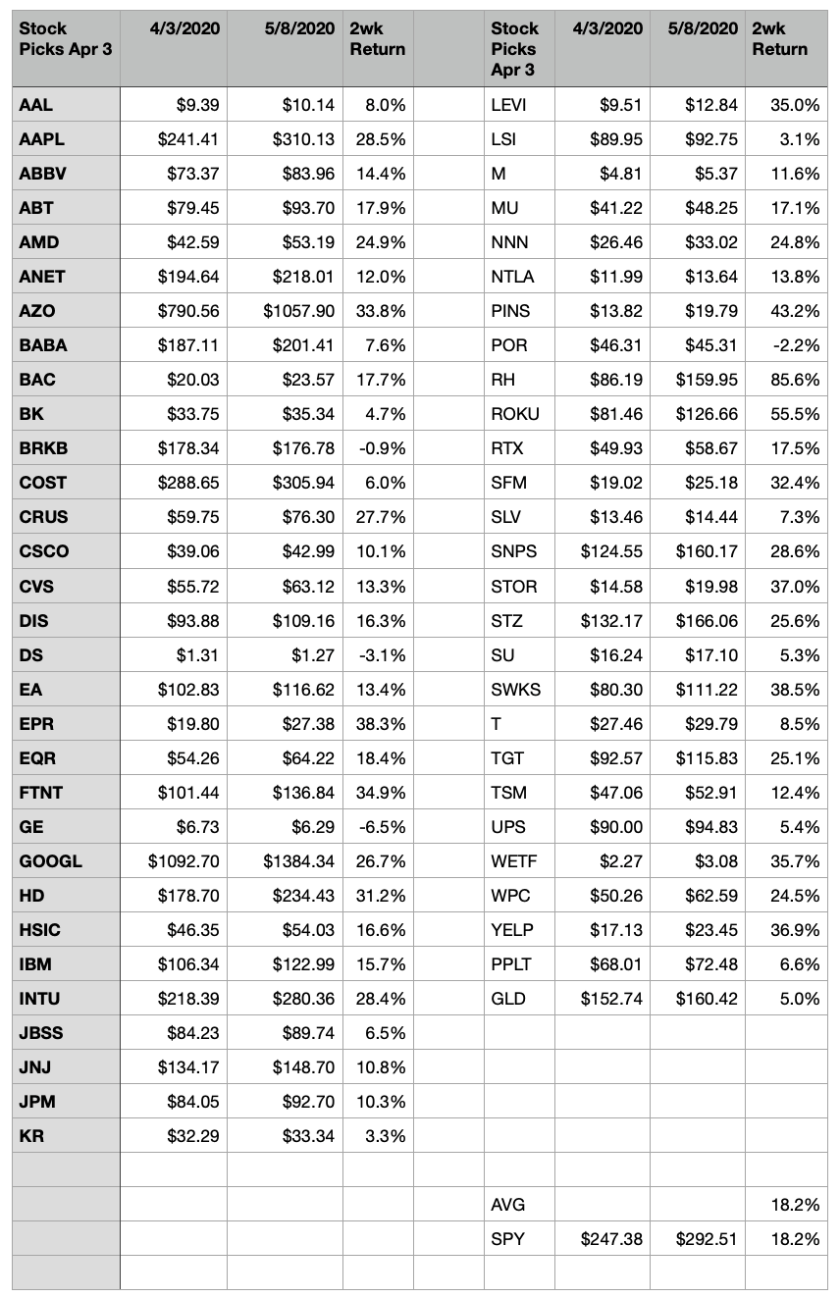
I am a bit surprised that these long picks so closely matched the SPY. With 500 stocks, the SPY provides better diversification. I prefer to be a bit more conscious of the stocks I am picking and don’t want to blindly invest in an index.
For some reason, I started looking at the current price of the S&P 500 of $2929.80 and looked back to when it was about this price in the past. On Oct 4, 2019, S&P 500 closed at $2951.01. Much more synchronistically, the S&P 500 hit a local top of $2925.51 on Oct 3, 2018. Over the next 3 months from that date, the S&P 500 dropped 17% to $2447.89. The Oct 3, 2018 date is synchronistic to me because I referred back to it in AAPL Stock Prediction for Oct 3, 2019, in which I noted:
On Oct 3, 2018, AAPL hit an all time high of $233.47 and today it is down over 20% from that high, opening at $178.37. Could I surf to a universe where APPL stock is up over 25% from today by Oct 3, 2019? In that universe, AAPL would be above it’s all time high price of $233.47. While I can imagine how I could increase my odds of that universe, I do not feel a calling to do so due to the limited influence I believe I have on that event. So, I’m left with a sense based primarily on wishful thinking that AAPL stock will hit a new all time high before Oct 3, 2019.
The AAPL stock prediction was close. AAPL closed at $220.83 on Oct 3, 2019 and a week later set a new high of $236.21 on Oct 11, 2019. On Mar 20, 2020, AAPL hit a year low of $229.24.
If it’s synchronistic, then there must be some meaning to it. The meaning that I’m feeling is that the world is at an inflection point and something unexpected is about to happen.





 surfing the universe