
2025-0117F-0001 Austin, TX
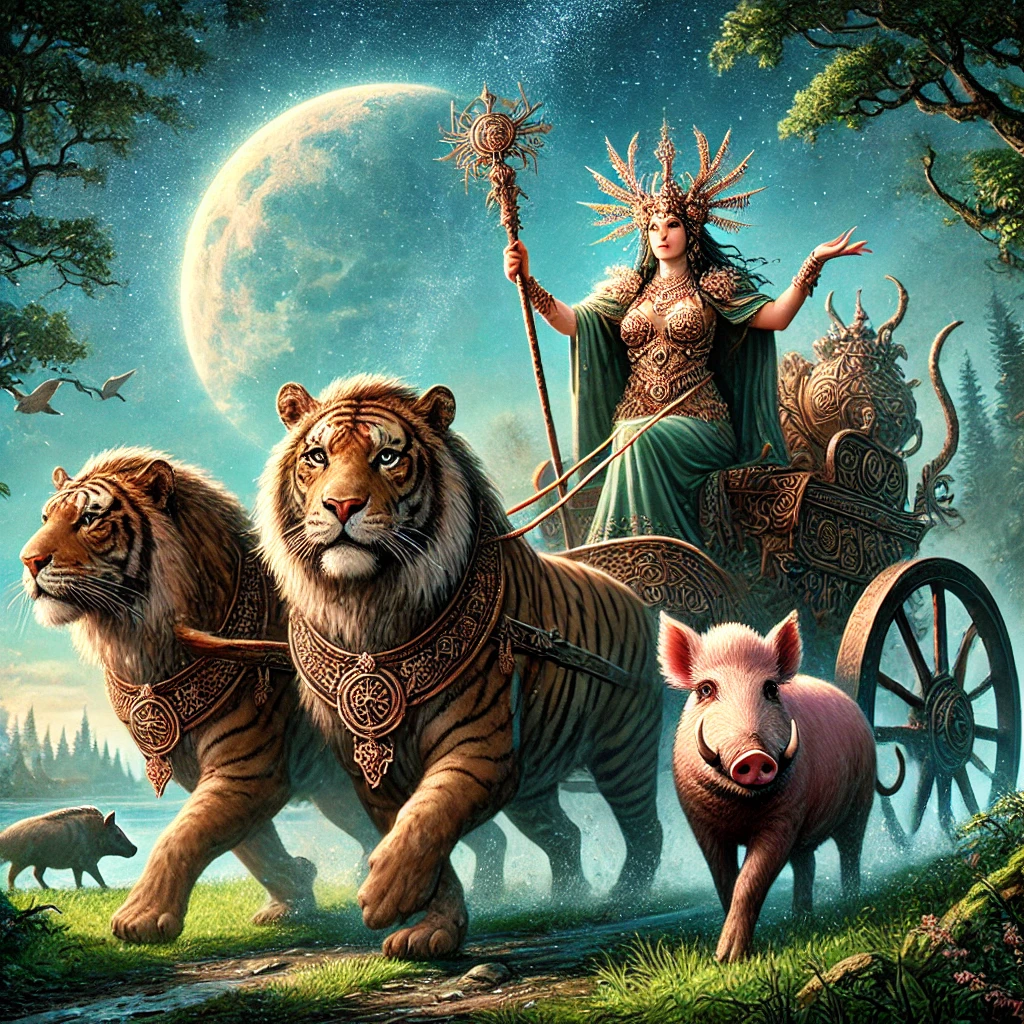
This is the sixth post of a seven-day series on days of the week. Day 17 of 2025 is a Friday. Friday is from the Old English “Frīgedæg” (Day of Frigg), which is from the Germanic Freyja/Frigg. Frigg and Freyja are two significant goddesses in Norse mythology, often overlapping in their characteristics but also distinct in key aspects. Frigg/Frigga is the wife of Odin (Wednesday) and mother of Baldr, the god of light and purity. Frigg is associated with motherhood, wisdom, and foresight. Freyja is a more sensual and passionate goddess associated with fertility, love, beauty, war, and death. She is a master of seiðr, a form of Norse magic and shamanistic practice. It involves influencing the world through supernatural means.
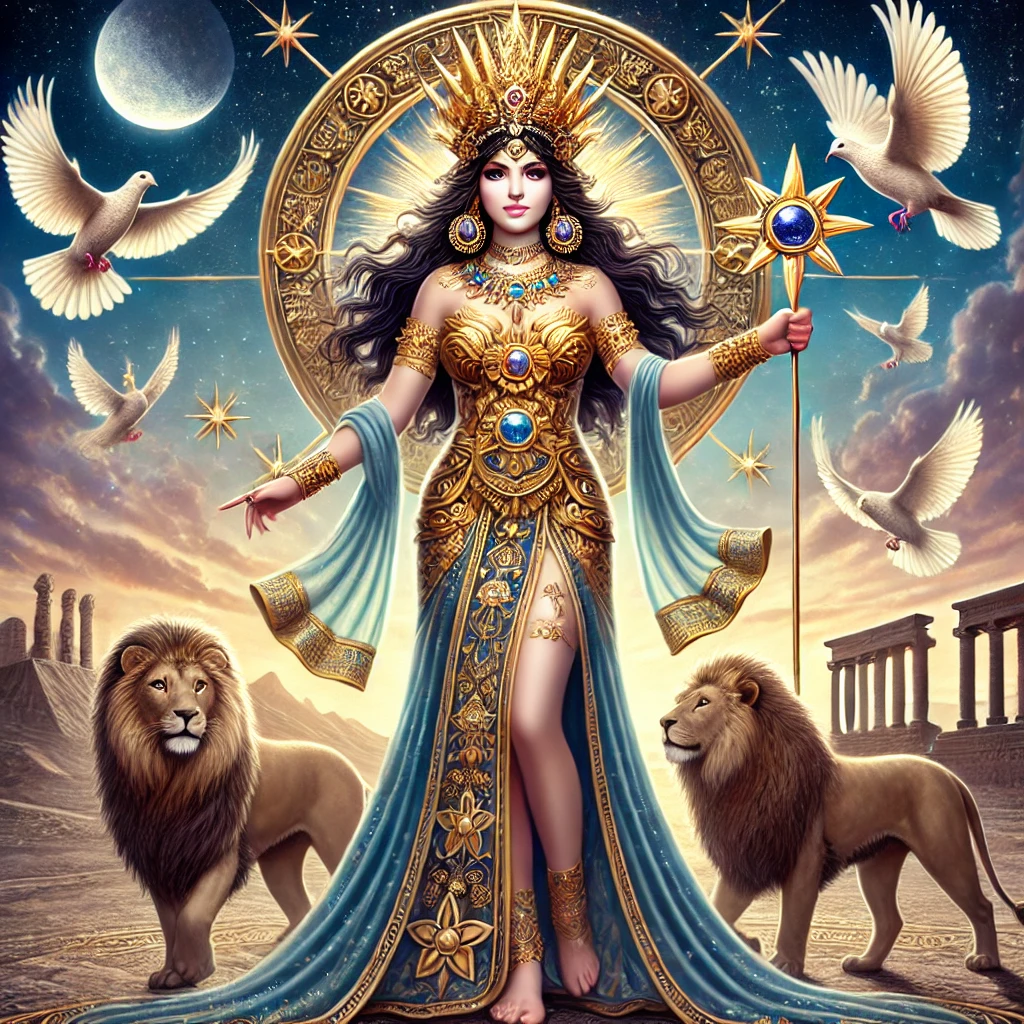
| Aspect | Ishtar (Babylonian) | Aphrodite (Greek) | Venus (Roman) |
| Domain | Love, fertility, war | Love, beauty, desire | Love, beauty, statecraft |
| Celestial Body | Venus | Venus | Venus |
| Symbolism | Lions, star, doves | Doves, roses, sea shells | Myrtle, pearls, Cupid |
| Cultural Role | Fertility and war | Romantic and sensual love | Love and Roman identity |
| Mythological Role | Cycles of life and death | Beauty’s power, chaos | Mother of Rome’s ancestry |
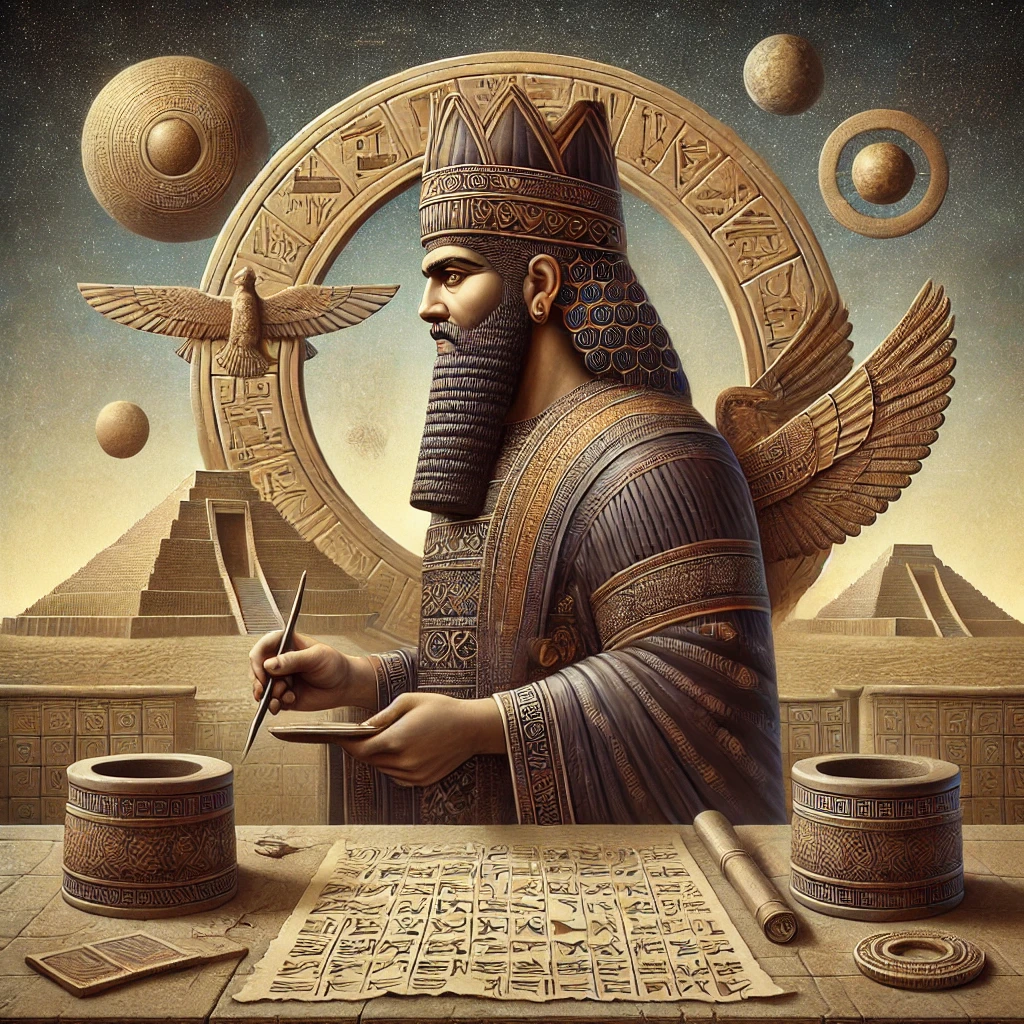
The commonalty of all of these goddesses is a reflection of humanity’s fascination with love, beauty, and power. Going back to Mesopotamian mythology, Ishtar (or Inanna in Sumerian) symbolized life, reproduction and abundance. She also represented destruction, chaos, and royal victories. Her sexuality was passionate, sensual, and uninhibited.
As the sixth day of the week, it’s a good time to remember the sexagesimal number system that originated from the Sumerians five millennia ago. This base 60 number system possibly came from base 12 finger counting combined with base 5 finger counting. With two hands one could easily show numbers 1 to 60. The base 12 finger counting would naturally lead to dividing the daylight time into 12 “hours”. These hours could be easily measured by the angle of the sun throughout the day. During nighttime, the stars and constellations would be used to measure the 12 hours of nighttime.
There were other cultures with a base 10 number system and by the time of cuneiform, it appears that base-6 and base-10 were used to write the numbers from 1 to 60.
Because of the near 360 days in a year and the near 30 days in a lunar month, the times 12 multiple of these two values made it mathematically convenient to use these values. But using a lunar month synchronized to the rising new crescent moon was also important. The full moon would then be mid month around the 14 or 15th of the month. From wikipedia:
Counting from the new moon, the Babylonians celebrated every seventh day as a “holy-day”, also called an “evil-day” (meaning “unsuitable” for prohibited activities). On these days officials were prohibited from various activities and common men were forbidden to “make a wish”, and at least the 28th was known as a “rest-day”. On each of them, offerings were made to a different god and goddess, apparently at nightfall to avoid the prohibitions: Marduk and Ishtar on the 7th, Ninlil and Nergal on the 14th, Sin and Shamash on the 21st, and Enkiand Mah on the 28th. Tablets from the sixth-century BC reigns of Cyrus the Great and Cambyses II indicate these dates were sometimes approximate. The lunation of 29 or 30 days basically contained three seven-day weeks, and a final week of eight or nine days inclusive, breaking the continuous seven-day cycle.

More details from wikipedia about Ishtar and her association with Venus:
Inanna/Ishtar’s most common symbol was the eight-pointed star,[74]though the exact number of points sometimes varies;[75] six-pointed stars also occur frequently, but their symbolic meaning is unknown.[79] The eight-pointed star seems to have originally borne a general association with the heavens,[80] but, by the Old Babylonian Period(c. 1830 – c. 1531 bce), it had come to be specifically associated with the planet Venus, with which Ishtar was identified.[80] Starting during this same period, the star of Ishtar was normally enclosed within a circular disc.
Diving Deeper with ChatGPT: I learned today that the Sumerian goddess Inanna, who was known later as the Akkadian Ishtar, was tied directly to Venus by 2100 BCE. This tie was in a Sumerian myth and found in Inanna’s Descent to Kur (the Underworld), which tells a story about the retrograde motion of Venus.
The Beginning: Inanna’s Decision to Descend: Inanna decides to descend to the underworld (Kur) to attend the funeral of Gugalanna, the “Bull of Heaven,” who was Eriskigal’s husband. She prepares for the journey by adorning herself with seven sacred items symbolizing her power and divine authority:
- A crown (representing her divinity)
- A lapis lazuli necklace
- A Breastplate (symbolizing strength)
- Gold rings
- A Measuring rod and line (symbols of judgment and law)
- A royal robe
- Sandals
Before descending, Inanna instructs her servant, Ninshubur, to seek help from the gods Enlil, Nanna, and Enki if she does not return.
The Seven Gates of the Underworld: As Inanna enters the underworld, she is stopped by Neti, the gatekeeper, who informs Ereshkigal of her arrival. Ereshkigal, angered by Inanna’s audacity to enter her realm uninvited, orders that Inanna be stripped of her power and humbled. Inanna is made to pass through seven gates, and at each gate, she must surrender one of her sacred items. By the time she reaches Ereshkigal, Inanna is naked and powerless.
Inanna’s Death: Inanna stands before Ereshkigal, who is described as furious and imposing. Ereshkigal strikes Inanna with the “eye of death” and hangs her corpse on a hook, leaving her lifeless in the underworld. As Inanna dies, fertility and life on Earth cease—plants wither, animals stop reproducing, and the world falls into chaos.
Rescue and Revival: After three days and nights without word from Inanna, Ninshubur seeks help as instructed. The gods Enlil and Nanna refuse to intervene, saying that Inanna chose her fate. Enki, the god of wisdom and water, agrees to help. He creates two small, genderless beings from the dirt under his fingernails and sends them to the underworld with the “food of life” and “water of life.” These beings empathize with Ereshkigal, who is in labor-like agony. Moved by their compassion, Ereshkigal grants them a boon. They request Inanna’s body, and using the “food of life” and “water of life,” they revive her.
The Substitution for Inanna: Inanna is allowed to leave the underworld, but only if she provides a substitute to take her place. As she ascends, the galla (demons of the underworld) accompany her to find someone to take her place. Inanna spares her loyal followers, such as Ninshubur, who mourned her absence. However, she finds her husband, Dumuzi, sitting on her throne, indifferent to her return. Outraged by his lack of grief, Inanna chooses Dumuzi as her substitute. Dumuzi flees, but the galla capture him, and he is taken to the underworld.
The Cycle of Death and Rebirth: Dumuzi’s sister, Geshtinanna, offers to share his fate. It is agreed that Dumuzi will spend half the year in the underworld, while Geshtinanna will take his place for the other half. This arrangement symbolizes the changing seasons. Dumuzi’s descent represents the barren months of winter. His return represents the fertile months of spring and summer.
Themes of this Myth:
- Death and Rebirth: Inanna’s descent and return mirror the cycles of nature, particularly the seasons and the fertility of the Earth.
- Power and Vulnerability: Inanna’s surrender of her items at the gates reflects the stripping of ego and power, a necessary process for transformation.
- Duality: Inanna embodies both love and war, life and death, showing the interconnectedness of opposites.
- Cosmic Order: The myth reinforces the need for balance between life and death, fertility and barrenness.
The myth of Inanna’s Descent to the Underworld reflects both celestial events and human experiences, based on the Sumerians’ understanding of nature and astronomy. Inanna’s descent, death, and return relate to Venus, the planet associated with her. Venus goes through a cycle that includes a period of retrograde motion and 8 days of invisibility as it shifts from the evening star to the morning star. This disappearance and reappearance resemble Inanna’s journey into the underworld, her temporary absence, and her eventual rebirth.
By connecting Inanna’s myth to Venus’s movements, the Sumerians gave their goddess cosmic importance, linking her powers of fertility, war, and transformation to the cycles of the heavens. The myth likely influenced rituals based on Venus’s phases, highlighting the connection between the divine, nature, and humanity. This mix of mythology and astronomy helped keep the story relevant, inspiring later cultures in Mesopotamian, Greco-Roman, and beyond. Inanna’s descent represents universal themes of renewal, balance, and cyclical transformation, making her a lasting symbol of the relationship between the earthly and the celestial.


 surfing the universe