20221206T Day -15: Amino Acid F is for Phenylalanine (Phe)

20221206T-1652-AustinTX
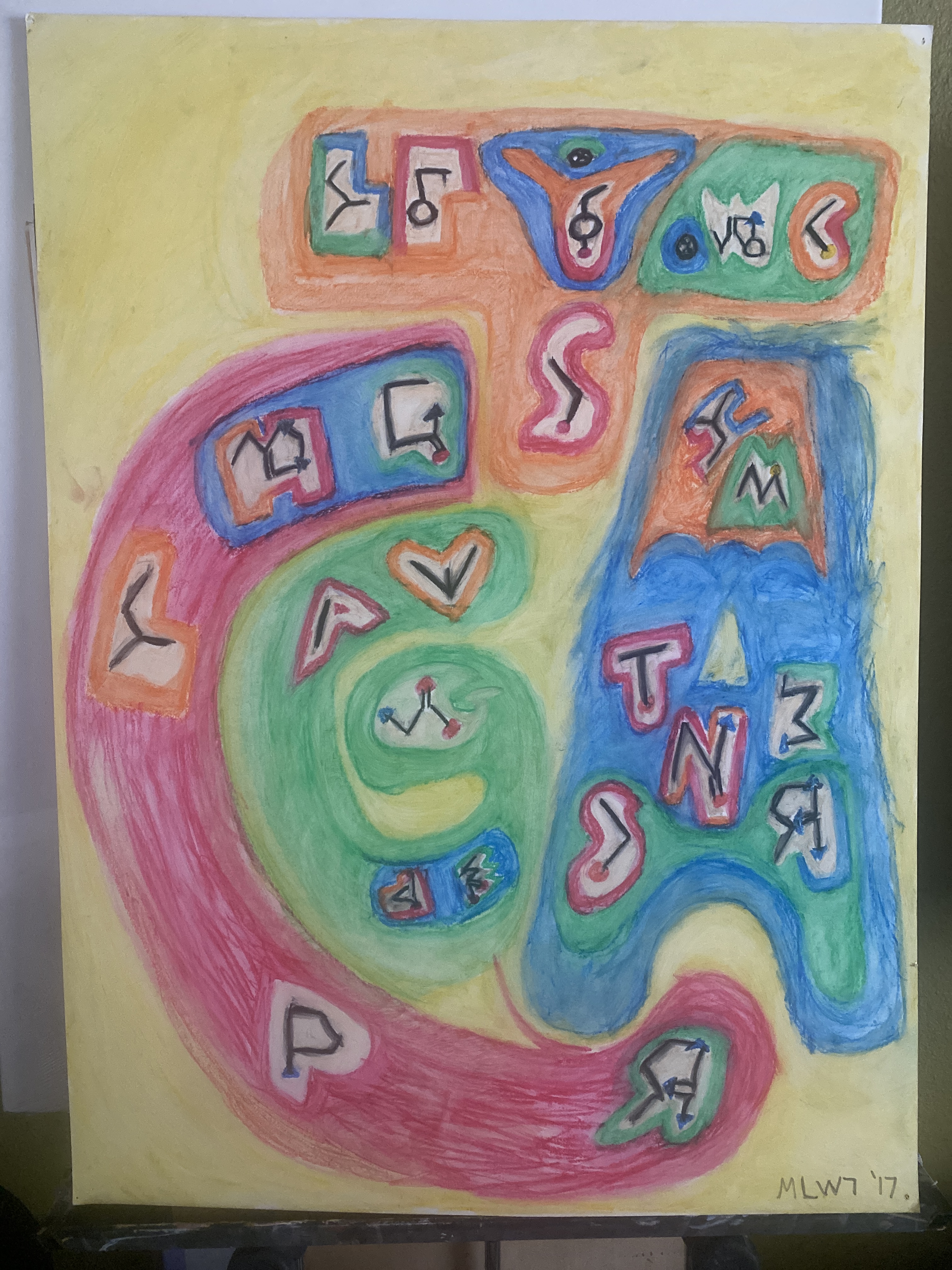
I painted this at my Aunt’s place one memorable night after eating a large chocolate brownie with vanilla ice cream. It’s a larger copy of a drawing I made in grad school.

Over 5 years ago, I painted an interpretation of the genetic code using symbols for the amino acids that I created to help me memorize the amino acid residues. Today, I drew these symbols again with a few modifications and different versions.

Doodling Amino Acid Symbols for Glycine, Alanine, Valine, Isoleucine, Leucine, Methionine, Phenylalanine, Tryosine, and Tryptophan – Dec. 6, 2022

Doodling Amino Acid Symbols for Serine, Threonine, Asparagine, Glutamine, Cysteine, and Proline – Dec. 6, 2022

Doodling Amino Acid Symbols for Aspartate, Glutamate, Arginine, Histidine, and Lysine – Dec. 6, 2022

F is for Phenylalanine, which is named after it’s structure of Alanine with a Phenyl group attached. Phenyl is derived from “pheno”, which means “I bear light” in Greek. Phenylalanine assists in the production of two important neurotransmitters, norepinephrine and dopamine, through an intermediate amino acid Tyrosine. Because norepinephrine has antidepressant properties, Phenylalanine is theorized to treat depression. An estimated 1 in 15,000 people have PKU, a rare genetic disorder resulting in a non or poorly functioning enzyme used to convert Phenylalanine to Tyrosine. This results in a reduction of norepinephrine and dopamine and a buildup of Phenylalanine. Individuals with PKU need to avoid Phenylalanine, which is most easily done by avoiding protein-rich foods such as meat, nuts, milk, cheese, and grains bread/pasta. Also, the artificial sweetener aspartame found in Equal and NutraSweet breaks down into Phenylalanine (and Aspartate).

Phenylalanine also stimulates the production of melanin, the pigment that gives color to skin, eyes, and hair.

Humans are not able to synthesize Phenylalanine and must get it from foods. High sources of Phenylalanine are found in the following foods, in priority order: powdered milk, hard cheese, soy, veal, lamb, chicken, pig, cod fish, oats, eggs, bread, rice, cow milk, and mushrooms. For reference, hard cheese has 10 times the Phenylalanine per gram than mushrooms.

Phenylalanine is encoded by the codons UUU and UUC. Notice that these codons are one mutation away from the codons UAU and UAC which encode the metabolically related amino acid Tyrosine.
20221205M Day -16: Amino Acid E is Glutamate (Glu)

20221205M-1471-AustinTX

Me: “How can I help?”

Z: “Can you do the dishes?”

… Four hours later, I got to the dishes. In the mean time, we pulled out all the under sink plumbing we could to find the source of the clog that was stopping up the sink. Each piece of plumbing had some nasty black mold. We got in all cleaned out and put back together.

Meanwhile my post on Glutamate is waiting until now. I wondered if Glutamate and mold were related and a quick search showed that they were. According to online sources, mold releases mycotoxins that cause oxidative stress and glutathione (a tripeptide of Glutamate, Cysteine, and Glycine) helps to counteract this effect through it’s antioxidant function. These sources seem to base their claims on papers like “Deficient Glutathione in the Pathophysiology of Mycotoxin-Related Illness” (doi: 10.3390/toxins6020608).

E is for Glutamate. Glutamate-Glu is encoded by the codons GAA and GAG. Glutamate is the principal excitatory neurotransmitter in the central nervous system and the most abundant free amino acid in the brain. Research has shown that Glutamate plays a role in depression (“Glutamate and depression: Reflecting a deepening knowledge of the gut and brain effects of a ubiquitous molecule“.

It is also of interest to me that Glutamate “may be the key blood pressure-lowering component of vegetables.” One theory is this is due to the role Glutamate plays in cardiovascular regulation in the central nervous system. However, take note of Monosodium glutamate (MSG), the sodium salt of glutamic acid used a common flavor enhancer. MSG contains 78% glutamic acid and 21% sodium. It has been shown to increase blood pressure, perhaps by increasing oxidative stress.

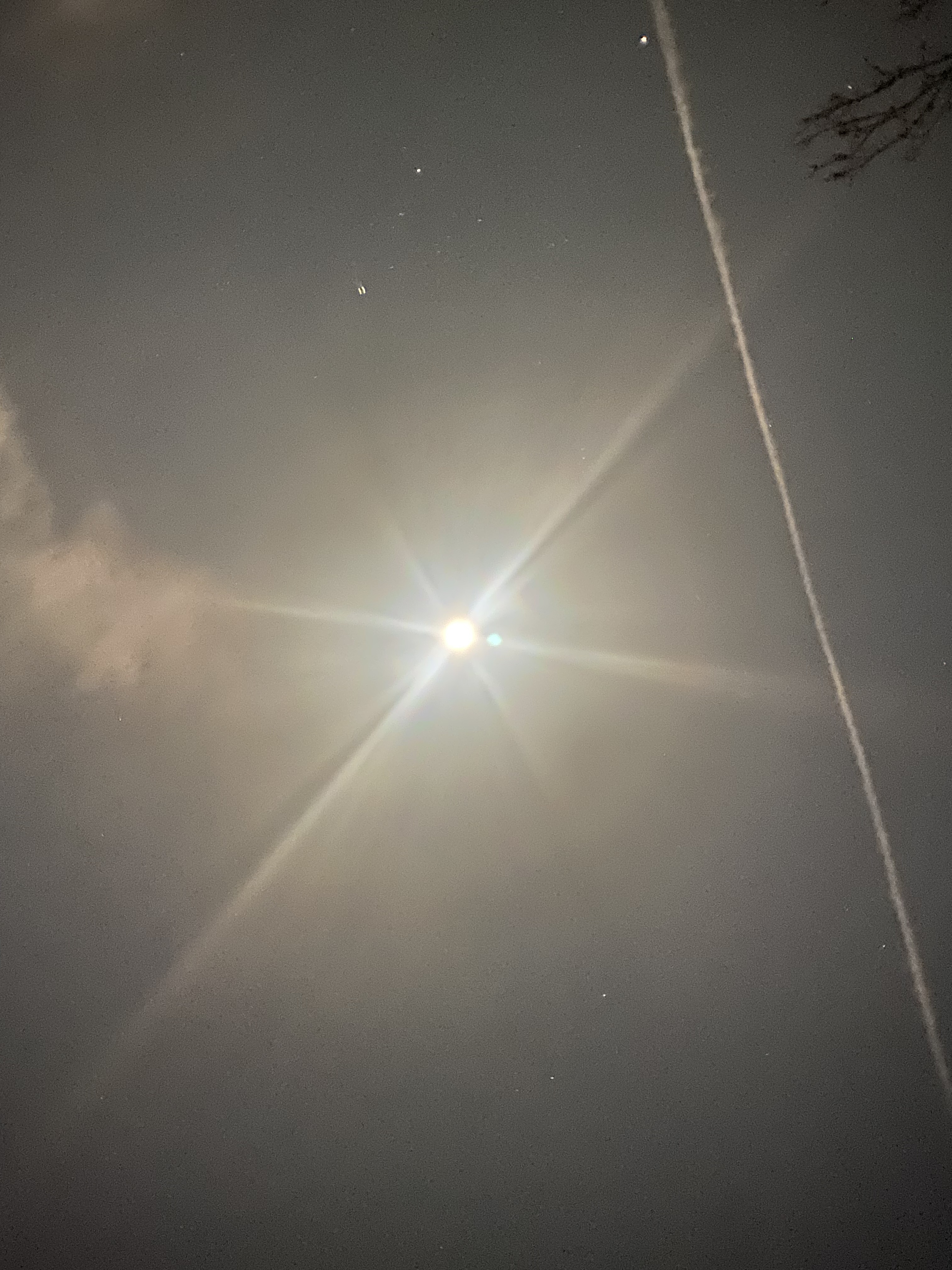
Just an image from tonight

20221204u Day -17: Amino Acid D is for Aspartic Acid (Asp)

20221204u-1331-AustinTX

Asparagus is high in Aspartate – My meal at Brio Tuscan Grill, Arboretum, Austin, Tx, Dec. 8, 2014

This morning I measured my bp and found it to be slightly elevated at 145/95. Two days ago it had been 165/115 and I decided to take a half pill of Lisinopril 20mg (so 10mg) to see what effect that had. The Lisinopril just happened to be in a multiyear old prescription bottle on my dresser. I haven’t taken bp meds in many years. The 10mg of Lisinopril didn’t lower my bp that night, but in the morning my bp was 135/85, which for me feels quite good as I have rarely measured the classic 120/80 or below, which would likely have me faint if I exercised. In fact, I stopped taking Lisinopril before because it would make me light headed after exercise. That, and I also blamed it for contributing to my tinnitus that developed after I started taking it 10 yrs ago. It seems that the initial 10mg I took 2 days ago is still active a bit in my body. This morning I found the half-pill I bit and bit it again to give myself a 5mg dose. I’m curious to see if this is effective. Lisinopril acts a a diuretic. I’ve been wondering the last two days what else would naturally act as a diuretic.

D is for Aspartic Acid (ASP). Sometimes in sequences it is indistinguishable from Asparagine (ASN) and is given the one letter code B to code for the ambiguous amino acid (ASP/ASN). Aspartic Acid is non-essential in humans and is important in the synthesis of other amino acids, including Isoleucine, Lysine, Methionine, Arginine, and it’s sometimes substituter Asparagine. I happened to have pubchem open on Asparagine (https://pubchem.ncbi.nlm.nih.gov/compound/Asparagine) and was just reading that Asparagine (a beta-amido derivative of Aspartic Acid) is a “nontoxic carrier of residual ammonia to be eliminated from the body” and acts as a diuretic.

A quick google search finds the “duh” vegetable with Asparagine … Asparagus! Webmd says:

Asparagus can increase urine production and is also a good source of dietary fiberfolic acidvitamin Cvitamin Evitamin B6, and several minerals

People use asparagus for high blood pressureobesitykidney stonesconstipation, and many other purposes, but there is no good scientific evidence to support these uses.

https://www.webmd.com/vitamins/ai/ingredientmono-286/asparagus

An interesting fact about Asparagine:

Asparagine was the first amino acid to be discovered when it was isolated from asparagus nutrition by French chemists Louis Nicolas Vauquelin and Pierre Jean Robiquet in 1806.

https://draxe.com/nutrition/essential-amino-acids/

While I can’t find any information on Aspartic Acid’s role as a diuretic, it seems as a precursor to Asparagine, it would be important as well. When I learned the amino acids with a song I wrote, I referred to Aspartic Acid by it’s conjugate base form Aspartate because it rhymed better 🙂 I’ll use Aspartate and Glutamate for the rest of this post.

Aspartate is encoded by the codons GAC and GAU. The other two codons beginning with GA (GAA and GAG) encode Glutamate, which is structurally and chemically similar to Aspartate. The Aspartate codons GAC and GAU are also a single mutation of the first nucleotide (G to A) to codons AAC and AAU which encode previously mentioned Asparagine, which is often substituted for Aspartate.

Aspartate and Glutamate are both neurotransmitters that stimulate NMDA receptors.

Aspartate, along with Phenylalanine, are used in the sweetener aspartame.

Food sources of Aspartate are asparagus, avocado, molasses, sausage meat, oysters, and wild game. I have an avocado in the fridge that needs to be eaten. I wonder what it taste like with molasses… pretty good!

20221203S Day -18: Amino Acid C is for Cysteine (Cys)

20221203S-1212-AustinTX

Last night I went to a “first Friday” open-house at The Odin in north Austin and met some people working on some very interesting projects. I met one of the co-founders of trilobio, a startup company working on “revolutionizing synthetic biology by changing the way synthetic biologists do science”.

Yesterday, I wrote about Alanine, the first common amino acid assigned a letter by IUPAC for bioinformatics research. The letter B is not assigned to a single amino acid but is instead used for both Aspartic Acid (Asp-D) and Asparagine (Asn-N) when it is either unclear or either amino acid may be found in a peptide sequence. Notice that the 3-letter codes for Asp-D are GAC and GAU and the 3-letter codes for Asn-N are AAC and AAU, so these two amino acids that are very close in molecular weight and size are separated in the genetic code by only a single nucleotide mutation between A and G in the first position.

C is for Cysteine, which is also abbreviated by Cys. It is sometimes abbreviated by the symbol Cyz when acting as a deprotonated catalytic residue. Cym also refers to the deprotonated form. Cyx is sometimes used to refer to Cysteine when the thiol is oxidized to form a disulfide derivative. The two sulfur-containing amino acids are more easily oxidized than the other amino acids.

Cysteine is the smallest and simplest of the two sulfur-containing proteinogenic amino acids (encoded by the genetic code). The other sulfur-containing amino acid is Methionine-Met-M.

Cysteine is encoded by the codons UGC and UGU. Notice that these codons are a single first position mutation (U to A) from the codons AGC and AGU which encode the similarly sized amino acid Serine-Ser-S. Also notice that the nearby UGA codon, which is normally described as a stop codon in the standard genetic code, can also encode for the “21st proteinogenic amino acid”, Selenocysteine-Sec-U, which is a modification of Cysteine in which Selenium replaces Sulfur. Additionally, Cysteine codons UGC and UGU are a single second position mutation (G to A) from the codons UAC and UAU which encode the slightly more acidic amino acid Tyrosine-Try-T, which is somewhat hydrophobic like Cysteine.

Of interest, “Cysteine has been proposed as a preventive or antidote for some of the negative effects of alcohol, including liver damage and hangover” is a quote from the wikipedia article on Cysteine. From the same article, Cysteine is important for flavoring food, breaking disulfide bonds in hair perms, and in detecting protein structure or investigating protein folding processes using site-directed spin labeling techniques.

A friend brought this David Bowie deck over on this night 3rd of Dec. It was synchronistic for me, so including a pic for this post.

20221202F Day -19: Amino Acid A is for Alanine

20221202F-1111-AustinTX

It’s been a while since I have regularly posted and I would like to document daily the exit of the wormhole that I’m feeling in my own timeline. To increase the probability of doing this, today I’m going to talk about Alanine, one of the amino acids encoded by the genetic code that has a heritage shared by all life forms known to exist.

Amino acids are fundamental to all known life. Through their amine and carboxyl ends, they link together to form a chain of amino acids that folds up into a dynamic 3-D functional shape called a protein. These proteins can be enzymatic and catalyze reactions or they can be structural.

In bioinformatics, latin letters have been assigned to each of the common amino acids for standardization of storing protein sequence data. The Latin alphabet becomes then a reasonable choice for ordering the amino acids.

A is for Alanine. Alanine has a very simple side chain, or residue, of a single methyl group (CH3). It is the second smallest amino acid after Glycine, which has no residue. The methyl group results in it being non-polar and aliphatic. It is ambivalent, meaning it does not have a strong preference for being inside or on the surface of a protein. It is non-essential in humans and can be synthesized from pyruvate or branched chain amino acids such as Leucine, Isoleucine, and Valine. The largest common amino acid, Tryptophan, is a derivative of Alanine.

Alanine is the second most popular amino acid, used almost 9% of the time in a diverse set of proteins and taxa. Second only to Leucine at almost 10%. See https://proteopedia.org/wiki/index.php/Amino_acid_composition for details.

Alanine is encoded by all codons starting with GC (GCA, GCC, GCG, and GCU).

The “Alanine World” hypothesis (ref: https://doi.org/10.3390/ijms20215507) proposes that ancestral proteins predominantly relied on Alanine to provide the basic scaffold and secondary structure of the protein.

I haven’t heard of the Alanine World hypothesis before today. I do remember reading about the RNA World hypothesis. It makes sense to me that some amino acids were here along with RNA in the beginning. I imagine that future computer simulations will provide convincing evidence for how and when our unique genetic code came into existence.

Another death in my circle today – my friend just texted that her mother passed away this morning. I am grateful that I was able to visit her and her Mom earlier this year.