1/1/1 – Reducing 2026 to its vibrational essence, we get 1, so the theosophically reduced date is 1/1/1. The Pythmen would be happy that we keep the universe orderly today by honoring their ancient practice.
For the new year, the 3 downloads I received are truth, meaning, and harmony.
Truth – seek to know both your inner truth and the truth of your environment
Meaning – spend your precious energy in a way that is meaningful to you and your environment
Harmony – be in harmony with your truth, both internal and external
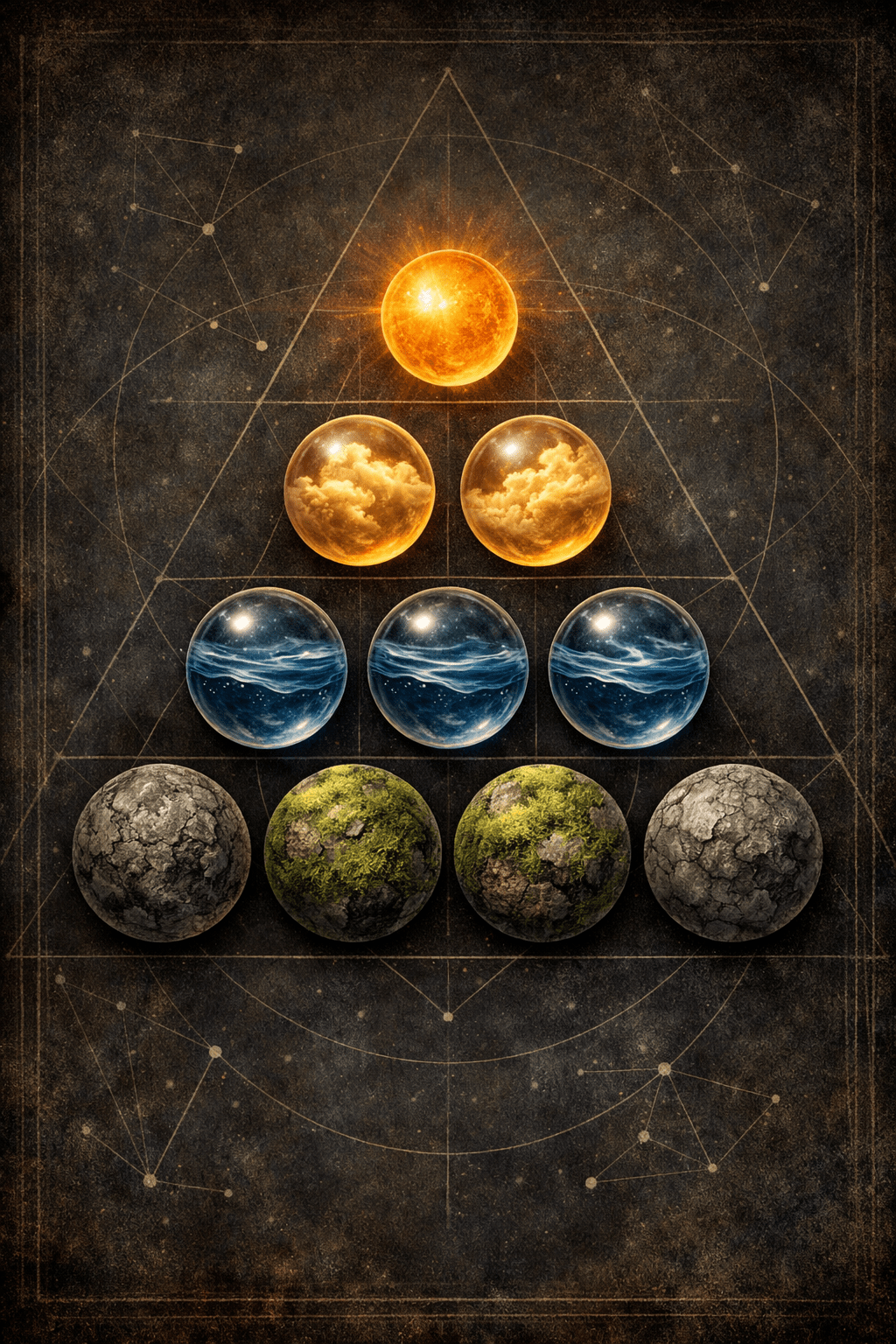
Fun fact: The Pythagoreans used the Tetracyts as a sacred symbol that represented the organization of the entire universe. The Tetracyts illustrated how the physical world is structured through geometry and dimensions:
One dot on first row represents the void, singularity, dimensionless
Two dots on second row represents a line, one dimension
Three dots on third row represents a surface/plane, two dimensions
Four dots on fourth row represents a solid, three dimensions
1+2+3+4=10, their perfect number that contained the essence of all things.
The four rows were also associated with the elements:
Fire – the creative spark and the most subtle form of matter
Air – the connective element that fills space between the sky/stars and the earth
Water – the flowing element that naturally spreads over a surface
Earth – the solid element that represents the completion of physical manifestation
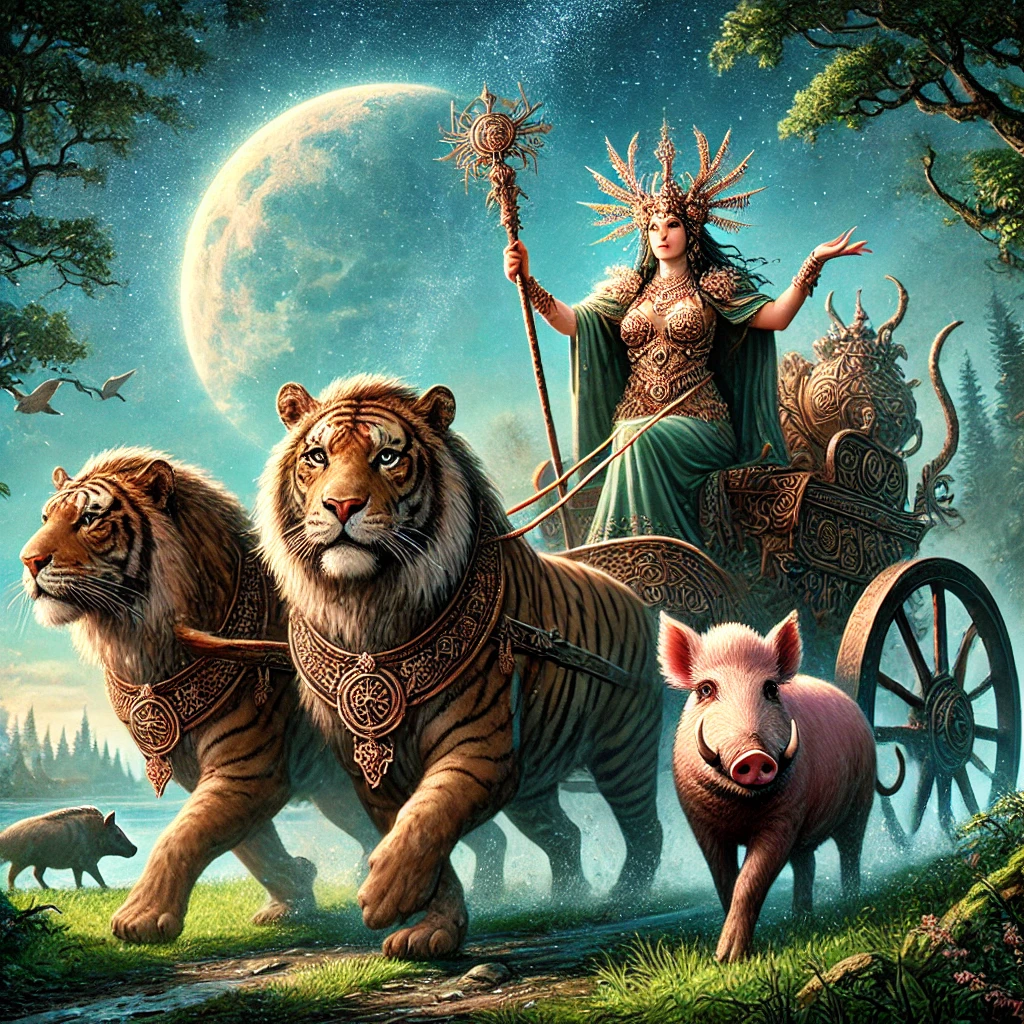
This is the sixth post of a seven-day series on days of the week. Day 17 of 2025 is a Friday. Friday is from the Old English “Frīgedæg” (Day of Frigg), which is from the Germanic Freyja/Frigg. Frigg and Freyja are two significant goddesses in Norse mythology, often overlapping in their characteristics but also distinct in key aspects. Frigg/Frigga is the wife of Odin (Wednesday) and mother of Baldr, the god of light and purity. Frigg is associated with motherhood, wisdom, and foresight. Freyja is a more sensual and passionate goddess associated with fertility, love, beauty, war, and death. She is a master of seiðr, a form of Norse magic and shamanistic practice. It involves influencing the world through supernatural means.
The Norse Goddess Freyja as imaged by ChatGPT
Aspect
Ishtar (Babylonian)
Aphrodite (Greek)
Venus (Roman)
Domain
Love, fertility, war
Love, beauty, desire
Love, beauty, statecraft
Celestial Body
Venus
Venus
Venus
Symbolism
Lions, star, doves
Doves, roses, sea shells
Myrtle, pearls, Cupid
Cultural Role
Fertility and war
Romantic and sensual love
Love and Roman identity
Mythological Role
Cycles of life and death
Beauty’s power, chaos
Mother of Rome’s ancestry
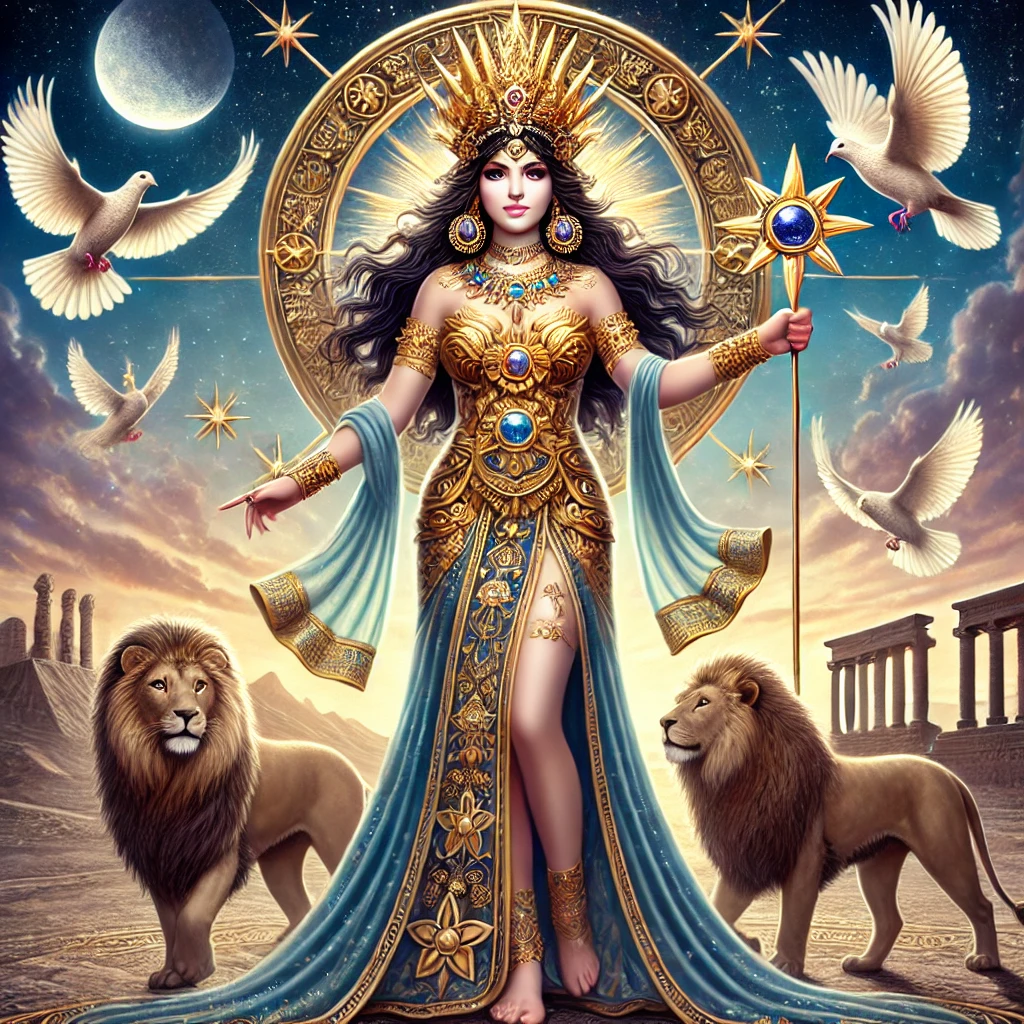
The commonalty of all of these goddesses is a reflection of humanity’s fascination with love, beauty, and power. Going back to Mesopotamian mythology, Ishtar (or Inanna in Sumerian) symbolized life, reproduction and abundance. She also represented destruction, chaos, and royal victories. Her sexuality was passionate, sensual, and uninhibited.
Ishtar (Inanna) embodying her roles as the Mesopotamian goddess of love, fertility, and war (credit: ChatGPT)
As the sixth day of the week, it’s a good time to remember the sexagesimal number system that originated from the Sumerians five millennia ago. This base 60 number system possibly came from base 12 finger counting combined with base 5 finger counting. With two hands one could easily show numbers 1 to 60. The base 12 finger counting would naturally lead to dividing the daylight time into 12 “hours”. These hours could be easily measured by the angle of the sun throughout the day. During nighttime, the stars and constellations would be used to measure the 12 hours of nighttime.
There were other cultures with a base 10 number system and by the time of cuneiform, it appears that base-6 and base-10 were used to write the numbers from 1 to 60.
Because of the near 360 days in a year and the near 30 days in a lunar month, the times 12 multiple of these two values made it mathematically convenient to use these values. But using a lunar month synchronized to the rising new crescent moon was also important. The full moon would then be mid month around the 14 or 15th of the month. From wikipedia:
Counting from the new moon, the Babylonians celebrated every seventh day as a “holy-day”, also called an “evil-day” (meaning “unsuitable” for prohibited activities). On these days officials were prohibited from various activities and common men were forbidden to “make a wish”, and at least the 28th was known as a “rest-day”. On each of them, offerings were made to a different god and goddess, apparently at nightfall to avoid the prohibitions: Marduk and Ishtar on the 7th, Ninlil and Nergal on the 14th, Sin and Shamash on the 21st, and Enkiand Mah on the 28th. Tablets from the sixth-century BC reigns of Cyrus the Great and Cambyses II indicate these dates were sometimes approximate. The lunation of 29 or 30 days basically contained three seven-day weeks, and a final week of eight or nine days inclusive, breaking the continuous seven-day cycle.
Queen of Heaven: Goddess Ishtar on an Akkadian Empire seal, 2350–2150 BCE. She is equipped with weapons on her back, has a horned helmet, places her foot in a dominant posture upon a lion secured by a leash and is accompanied by the star of Shamash. (Credit: wikipedia)
More details from wikipedia about Ishtar and her association with Venus:
Inanna/Ishtar’s most common symbol was the eight-pointed star,[74]though the exact number of points sometimes varies;[75] six-pointed stars also occur frequently, but their symbolic meaning is unknown.[79] The eight-pointed star seems to have originally borne a general association with the heavens,[80] but, by the Old Babylonian Period(c. 1830 – c. 1531 bce), it had come to be specifically associated with the planet Venus, with which Ishtar was identified.[80] Starting during this same period, the star of Ishtar was normally enclosed within a circular disc.
Diving Deeper with ChatGPT: I learned today that the Sumerian goddess Inanna, who was known later as the Akkadian Ishtar, was tied directly to Venus by 2100 BCE. This tie was in a Sumerian myth and found in Inanna’s Descent to Kur (the Underworld), which tells a story about the retrograde motion of Venus.
The Beginning: Inanna’s Decision to Descend: Inanna decides to descend to the underworld (Kur) to attend the funeral of Gugalanna, the “Bull of Heaven,” who was Eriskigal’s husband. She prepares for the journey by adorning herself with seven sacred items symbolizing her power and divine authority:
A crown (representing her divinity)
A lapis lazuli necklace
A Breastplate (symbolizing strength)
Gold rings
A Measuring rod and line (symbols of judgment and law)
A royal robe
Sandals
Before descending, Inanna instructs her servant, Ninshubur, to seek help from the gods Enlil, Nanna, and Enki if she does not return.
The Seven Gates of the Underworld: As Inanna enters the underworld, she is stopped by Neti, the gatekeeper, who informs Ereshkigal of her arrival. Ereshkigal, angered by Inanna’s audacity to enter her realm uninvited, orders that Inanna be stripped of her power and humbled. Inanna is made to pass through seven gates, and at each gate, she must surrender one of her sacred items. By the time she reaches Ereshkigal, Inanna is naked and powerless.
Inanna’s Death: Inanna stands before Ereshkigal, who is described as furious and imposing. Ereshkigal strikes Inanna with the “eye of death” and hangs her corpse on a hook, leaving her lifeless in the underworld. As Inanna dies, fertility and life on Earth cease—plants wither, animals stop reproducing, and the world falls into chaos.
Rescue and Revival: After three days and nights without word from Inanna, Ninshubur seeks help as instructed. The gods Enlil and Nanna refuse to intervene, saying that Inanna chose her fate. Enki, the god of wisdom and water, agrees to help. He creates two small, genderless beings from the dirt under his fingernails and sends them to the underworld with the “food of life” and “water of life.” These beings empathize with Ereshkigal, who is in labor-like agony. Moved by their compassion, Ereshkigal grants them a boon. They request Inanna’s body, and using the “food of life” and “water of life,” they revive her.
The Substitution for Inanna: Inanna is allowed to leave the underworld, but only if she provides a substitute to take her place. As she ascends, the galla (demons of the underworld) accompany her to find someone to take her place. Inanna spares her loyal followers, such as Ninshubur, who mourned her absence. However, she finds her husband, Dumuzi, sitting on her throne, indifferent to her return. Outraged by his lack of grief, Inanna chooses Dumuzi as her substitute. Dumuzi flees, but the galla capture him, and he is taken to the underworld.
The Cycle of Death and Rebirth: Dumuzi’s sister, Geshtinanna, offers to share his fate. It is agreed that Dumuzi will spend half the year in the underworld, while Geshtinanna will take his place for the other half. This arrangement symbolizes the changing seasons. Dumuzi’s descent represents the barren months of winter. His return represents the fertile months of spring and summer.
Themes of this Myth:
Death and Rebirth: Inanna’s descent and return mirror the cycles of nature, particularly the seasons and the fertility of the Earth.
Power and Vulnerability: Inanna’s surrender of her items at the gates reflects the stripping of ego and power, a necessary process for transformation.
Duality: Inanna embodies both love and war, life and death, showing the interconnectedness of opposites.
Cosmic Order: The myth reinforces the need for balance between life and death, fertility and barrenness.
The myth of Inanna’s Descent to the Underworld reflects both celestial events and human experiences, based on the Sumerians’ understanding of nature and astronomy. Inanna’s descent, death, and return relate to Venus, the planet associated with her. Venus goes through a cycle that includes a period of retrograde motion and 8 days of invisibility as it shifts from the evening star to the morning star. This disappearance and reappearance resemble Inanna’s journey into the underworld, her temporary absence, and her eventual rebirth.
By connecting Inanna’s myth to Venus’s movements, the Sumerians gave their goddess cosmic importance, linking her powers of fertility, war, and transformation to the cycles of the heavens. The myth likely influenced rituals based on Venus’s phases, highlighting the connection between the divine, nature, and humanity. This mix of mythology and astronomy helped keep the story relevant, inspiring later cultures in Mesopotamian, Greco-Roman, and beyond. Inanna’s descent represents universal themes of renewal, balance, and cyclical transformation, making her a lasting symbol of the relationship between the earthly and the celestial.
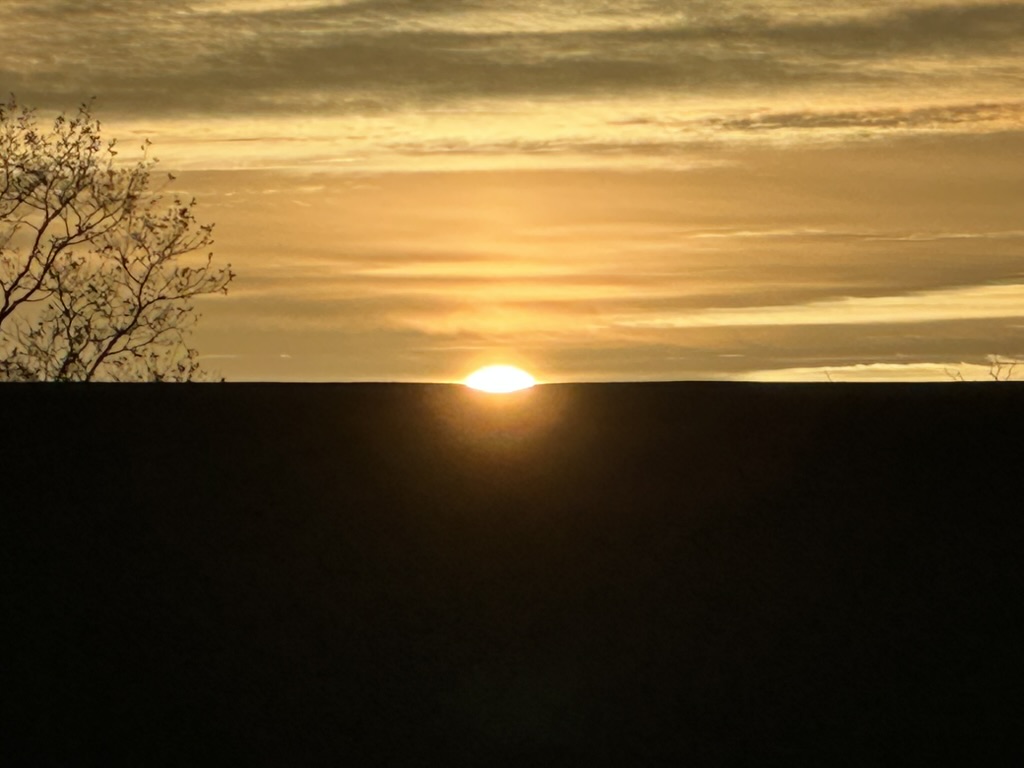
It’s now morning and the sun is rising again. I only wrote the title of this post last night. I was doing a bit of research on Sunday about the history of Sunday. When near midnight I read that Sunday has traditionally been a day of rest, I felt myself getting very sleepy. I decided to finish in the morning. Now I am reading that actually the 7th day is the day of rest, so I have to wait until Saturday to rest.
Day 12 of 2025 is a Sunday. How synchronistic in many ways. To learn the origin of Sunday, we have to travel back seven millennium to the time period of 2025-7000 =-4,975. Geographically, we need to focus on southern Mesopotamia. During this first millennial time period of 4975 BCE to 3976 BCE, the people of this area were moving from dispersed Neolithic settlements to more centralized villages. Irrigation was used to move water from the Tigris and Euphrates rivers. A reliable water supply allowed these villages to grow barley crops, dates, and keep livestock. Temples were constructed, with the earliest and most significant one being the temple of Eridu.
Aside: In Sumerian mythology, Eridu is the first city. It was created by the gods. It is associated with the god Enki (also known as Ea), the god of water, knowledge, mischief, crafts, and creation. The Eridu temple, known as the E-abzu, is dedicated to the god Enki. Archaeologists call this millennial period the Ubaid period, which continues to c. 4000 BCE.
There were no written calendars and cuneiform did not exist yet. Archaeologists have found clay tokens of different shapes. I have not seen any research that claims these tokens were used as money, but it only makes sense to me that they were used as a medium of exchange. Here are seven different types of tokens and how I imagine that they might have been used. I have also ordered them and given a representation I will explain later.
Cone – for barley and wheat, representing a cone of light, life, and earthly sustenance
Ovoid – for eggs and small animals, representing cycles, fertility and wisdom
Disc – for fish and cheese, representing conflict and nourishment from struggle
Cylinder – for rolled textiles and rugs, representing communication and trade
Gemstones, e.g. obsidian or lapis lazuli – for luxury items, representing wealth and authority
Spherical – for livestock, representing fertility, beauty and abundance
Triangle/Wedge – for land or labor, representing structure, balance, and discipline
The ancient Babylonians used one of the most advanced mathematical systems of their time. The sexagesimal (base-60) system is the foundation for our 360º circle, 60 minutes in an hour, 60 seconds in a minute, and 24 hours in a day. The number 60 was chosen because it is highly divisible (with divisors of 1, 2, 3, 4, 5, 6, 10, 12, 15, 20, 30, and 60). This makes it ideal for fractional measurements. It also makes it useful for dividing time, space and celestial cycles.
Notice how the divisors of 60 include all the integers up through six, but not seven. Seven is mathematically special in a base-60 numbering system. Additionally, the lunar cycle is about 29.5 days on average (it varies between 29.27 and 29.83 days). Day 1 of a lunar cycle would begin with the first crescent moon after the new moon. This would naturally lead to day 7, 14, 21, and 28 aligning very closely with four main phases of the moon: first quarter, full moon, last quarter, and dark moon. On these multiple of 7 days, certain activities were forbidden or restricted by the Babylonian priests. Old Mesopotamian texts refer to these four days of the lunar month as “ul ūma” (evil days). These days were considered both sacred and inauspicious. Therefore, to avoid angering the gods, or disturbing the cosmic order, certain activities were restricted. The reasoning was tied to the Moon’s transition points which were seen as powerful but unstable energy.
On these moon transition points, the priests advised the following:
Avoid making major decisions or judgments
Refrain from starting new ventures
Refrain from working or agricultural work
Avoid travel or expeditions
Practice sexual abstinence
Limit public appearances or displays of power
Practice self reflection and mindfulness
To counteract the inauspicious energies and to counterbalance the risks of acting on these sacred days, priests often prescribed rituals:
Sacrifices and offerings of animals, grains, or incense to appease the gods
Consult omens through liver readings, astrology, or other forms of divination
Undergo ritual cleansings (e.g. fasting, bathing in sacred water)
Align with divine will through seclusion, mediation, and prayer
Diving Deeper: The Enuma Anu Enlil is a collection of astronomical and astrological omens. It details the significance of lunar days and specifically mentions the multiple of seven days:
Day 7: A day of rest and worship
Day 14: A day of reflection and time of fullness – no war or harsh judgments
Day 21: A day of introspection and preparation
Day 28: A day of vulnerability and time of renewal – defer decisions and prioritize rituals
These multiple of seven days are actually tied to Saturday rather than Sunday. So, for Sunday we have:
Day 1: A day to start new initiatives and a time of renewal
Day 8: A day to build momentum and make progress in a measured way
Day 15: A day to celebrate accomplishments, avoid hubris, seek balance, and tap into your divinity
Day 22: A day to reflect, consolidate, and prepare for the end of the cycle
Update 2025-0118S-1034: I don’t know if I was inspired by my 5-year ago post when I blogged about this day. I have been checking these to get inspiration so it is very likely that I did. However, I don’t know remember doing so. It was a short post 5 years ago which I can just include here:
The number 12 is special to Earth, it’s Moon, and the Sun through the fact that the Moon revolves around the Earth 12 times during the time that the Earth revolves around the sun. There are 12 lunar cycles plus 11 or 12 days in a year. The Babylonians calendar defined a year to be 12 lunar months, each beginning with a new sunset crescent moon in the western sky. Twelve is found prominently in Judaism, Christianity, Islam, Buddhism, Hinduism, and Greek mythology.
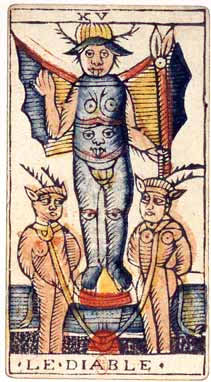
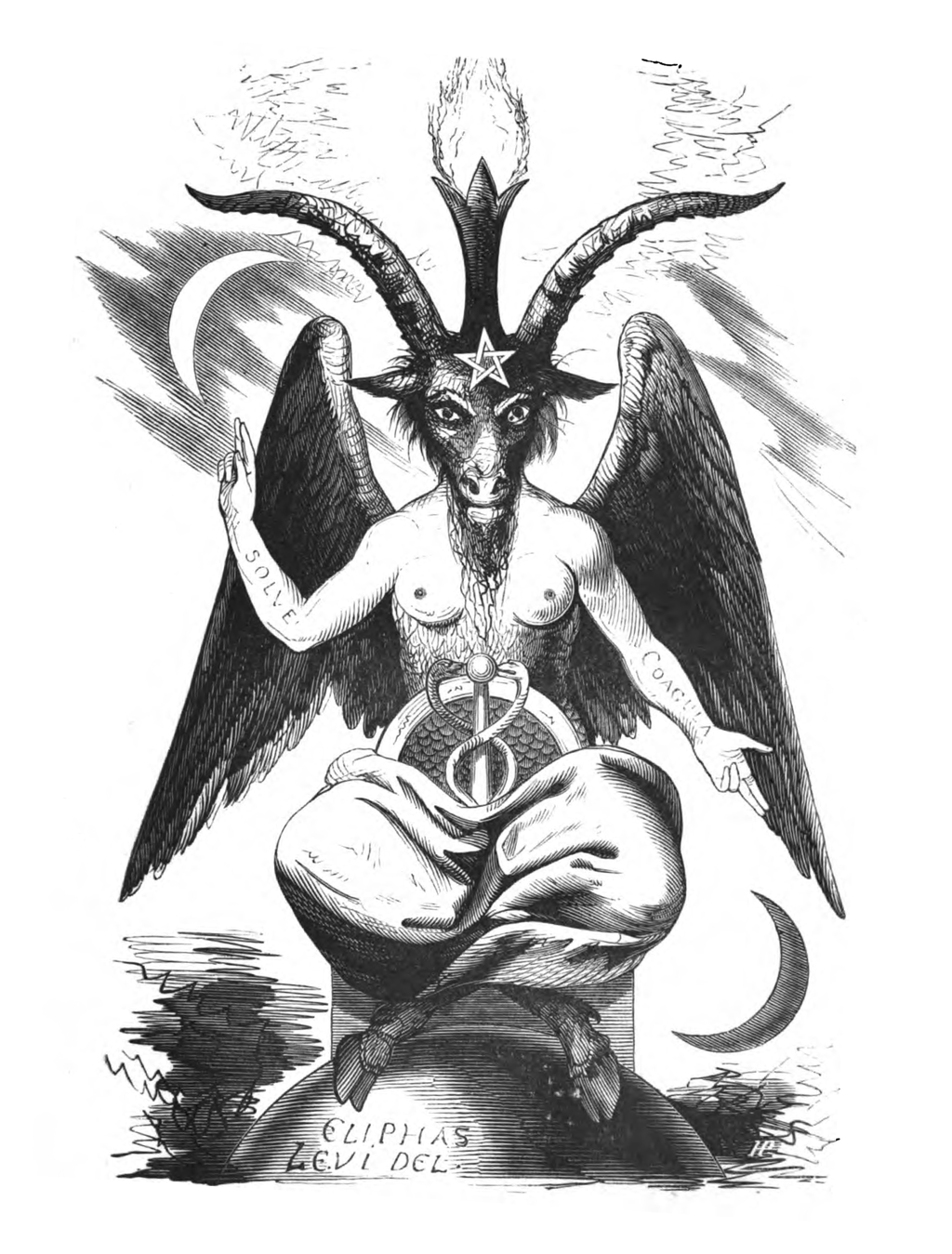
On this 15th day of the year 2020, I was drawn to the devil card – the fifteenth Major Arcana card of most Tarot decks. Above are images from the Tarot of Marseilles and the Rider-Waite tarot decks. The Rider-Waite version appears to be based on Eliphas Levi’s Baphomet in Dogme et Riguel de la Haute Magie, 1856:
Levi’s Baphomet presents an image containing a number of contrasts: symmetry/anti-symmetry, light/dark, black/white, male/female, and up/down. The history of the word/name Baphomet begins almost 1000 years ago in a letter written in July, 1098 by the crusader Anselm of Ribemont:
Sequenti die aurora apparente, altis vocibus Baphomethinvocaverunt; et nos Deum nostrum in cordibus nostris deprecantes, impetum facientes in eos, de muris civitatis omnes expulimus.
As the next day dawned, they called loudly upon Baphometh; and we prayed silently in our hearts to God, then we attacked and forced all of them outside the city walls.
It is believed that Baphometh was a Old French spelling of the Islamic prophet Muhammad. The name appeared circa 1195 and circa 1250. Ramon Llull‘s earliest known work , the Libre de la doctrine pueril, has a chapter (in an Occitan translation) entitled De Bafomet.



 surfing the universe

